StegaStamp: Invisible Hyperlinks in Physical Photographs (Tancik et al., 2020)
How StegaStamp hides hyperlink identifiers in printed or displayed photos and learns to recover them through a camera.
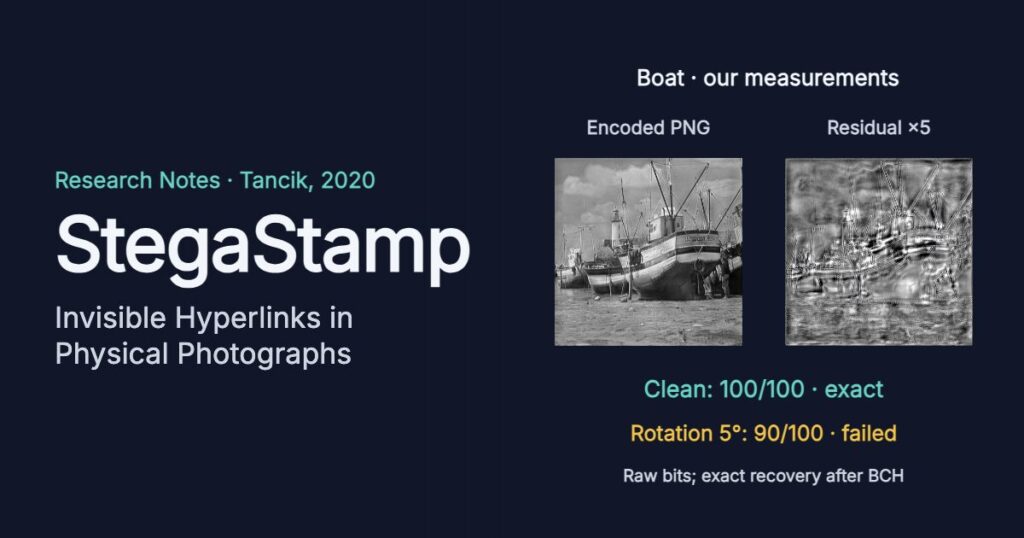
How StegaStamp hides hyperlink identifiers in printed or displayed photos and learns to recover them through a camera.
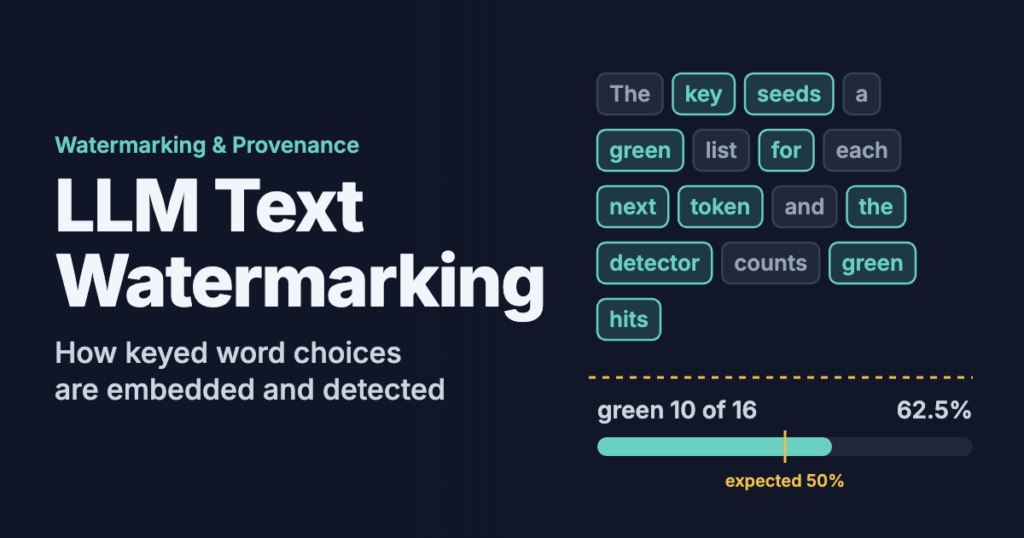
How generation-time text watermarks encode a statistical signal, how detectors test it, and how editing, forgery and access change the evidence.
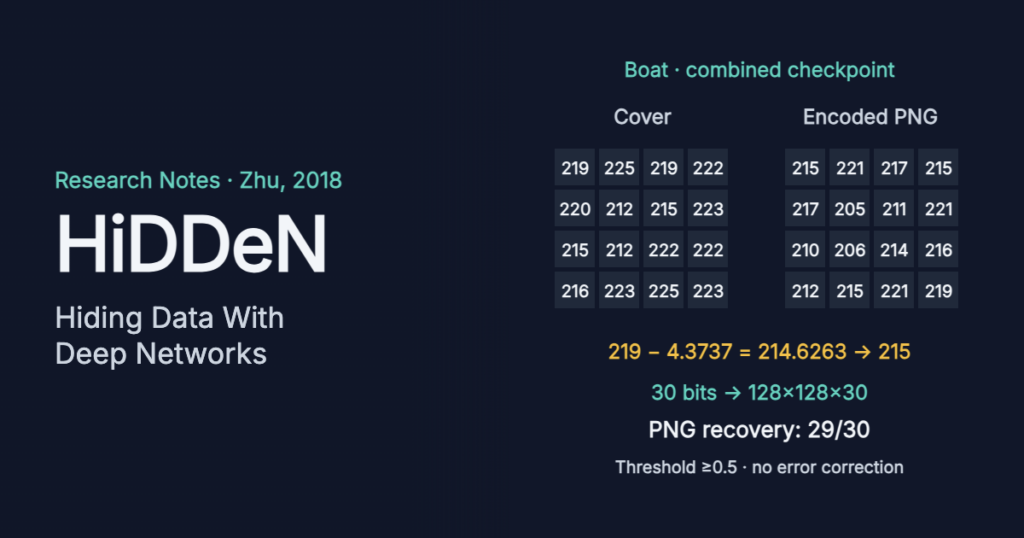
How HiDDeN learns to hide and recover binary messages, with the authors’ evidence and our Airplane and Boat measurements.
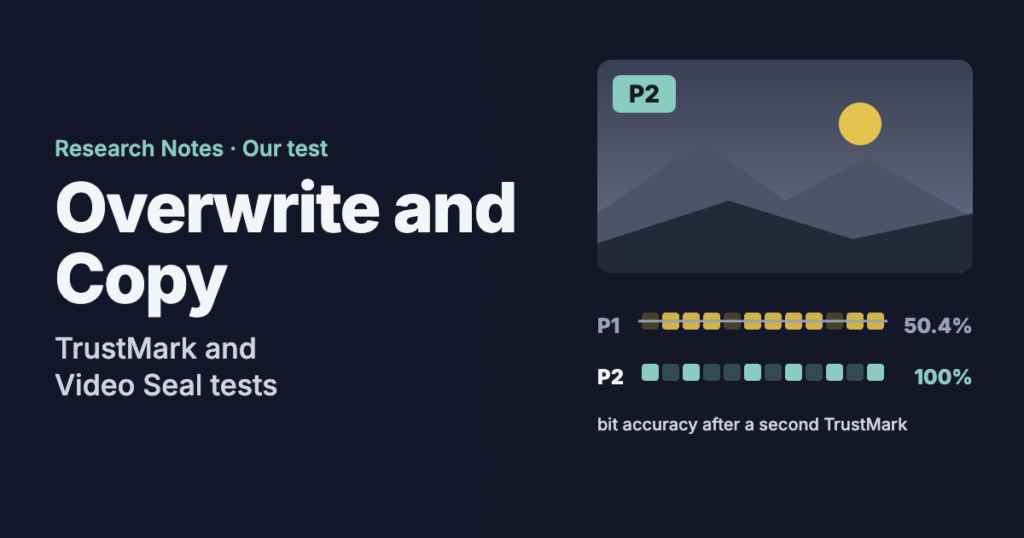
We measured payload recovery after edits, overwriting, cross-method embedding and residual copying with TrustMark and Video Seal.

How big tech marks AI images, video, audio and text, what survives distribution, and how re-insertion attacks complicate provenance.

A TrustMark identifier survived JPEG exports and a screenshot, leading to the stored C2PA manifest. Only the exact copy passed the recovered record’s file check.
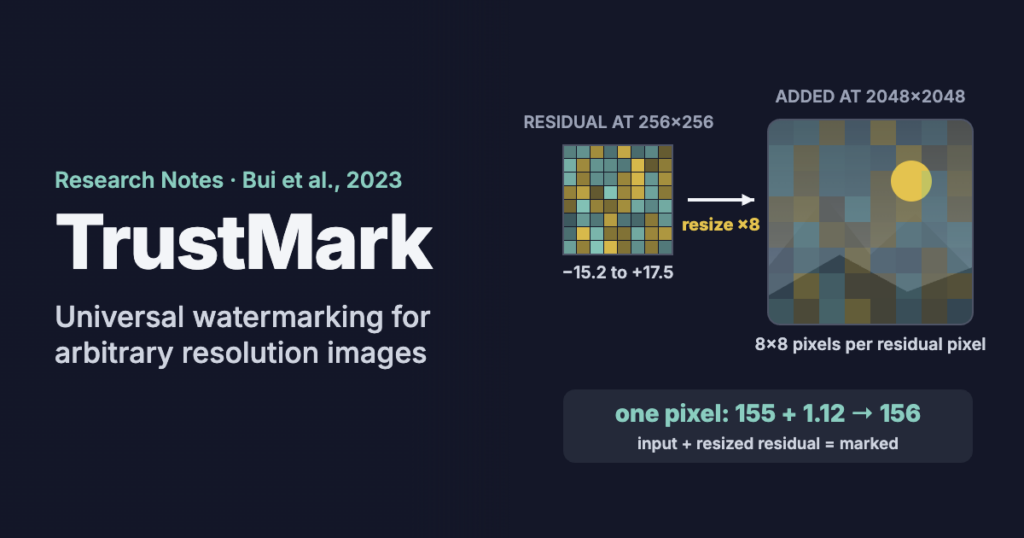
TrustMark’s design choices, the authors’ experiments, and our separate Airplane and Boat tests at two marking sizes.

We tested nine copies of a signed JPEG. Exports lost the C2PA record; a comment broke its link to the file while the signature still validated.
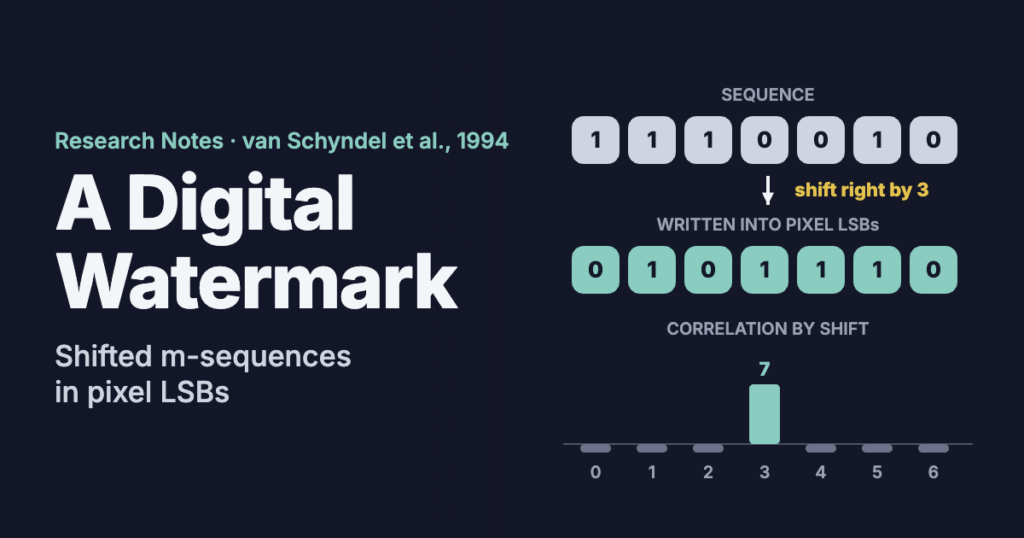
Why van Schyndel and colleagues use shifted sequences, how their two pixel-domain methods embed and decode them, and what the paper and our separate JPEG tests report.
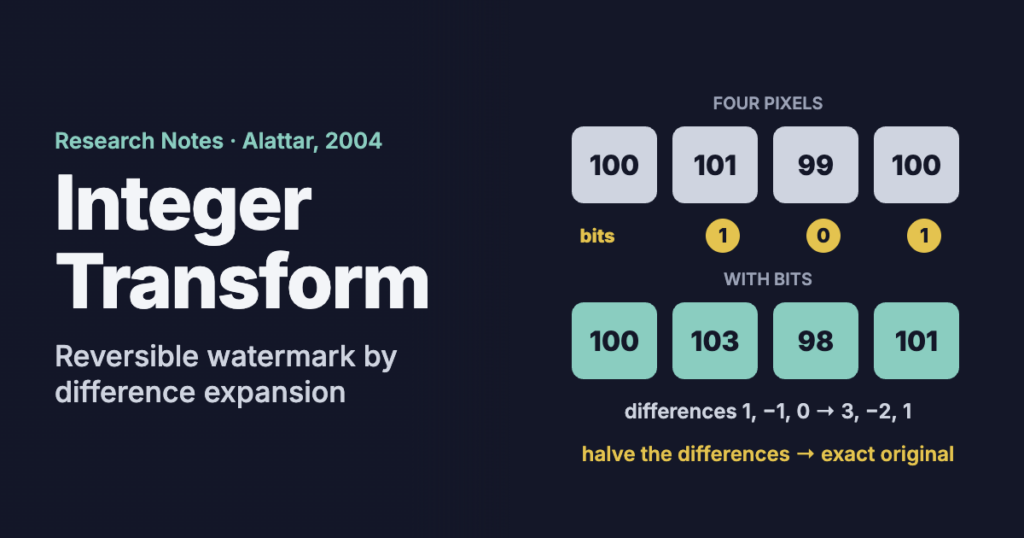
Why Alattar expands pixel differences, how recovery information and thresholds control capacity, and what the paper experiments and our separate image tests report.